For several years now, I have found myself having the same conversation with pastors, missionaries, parents, and friends from very different settings. People describe a growing sense of pressure coming from every direction. Family life feels harder to sustain. Commitment to the local church requires more intentional effort. Work and community obligations press in with real weight. At the same time, there is constant moral pressure to respond to national and global issues with equal urgency and emotional investment.
Most people are not disengaged. They are overwhelmed.
Christians often struggle to make sense of their responsibilities because everything arrives framed as a crisis. Every cause presents itself as a measure of faithfulness. When obligations are treated as interchangeable, people either burn out or begin to pull back. Some devote themselves to distant causes while neglecting the relationships closest to them. Others double down on what is near and grow increasingly closed off to anything beyond it. Both responses are common, and both leave people restless.
Scripture speaks with more clarity than our moment often allows. The Bible assumes that love is practiced through real duties to real people in real places. God forms households. He gathers believers into local churches. He situates them among neighbors and within a people. These bonds are not accidental. They are the ordinary means through which faith is shaped and witness takes root.
This is where the idea of rightly ordered love becomes essential. Love has direction and weight. God stands first, and from that foundation love is expressed through the responsibilities that accompany the roles and places God assigns. When these responsibilities are ignored or treated as secondary, broader claims of compassion lose their grounding and credibility.
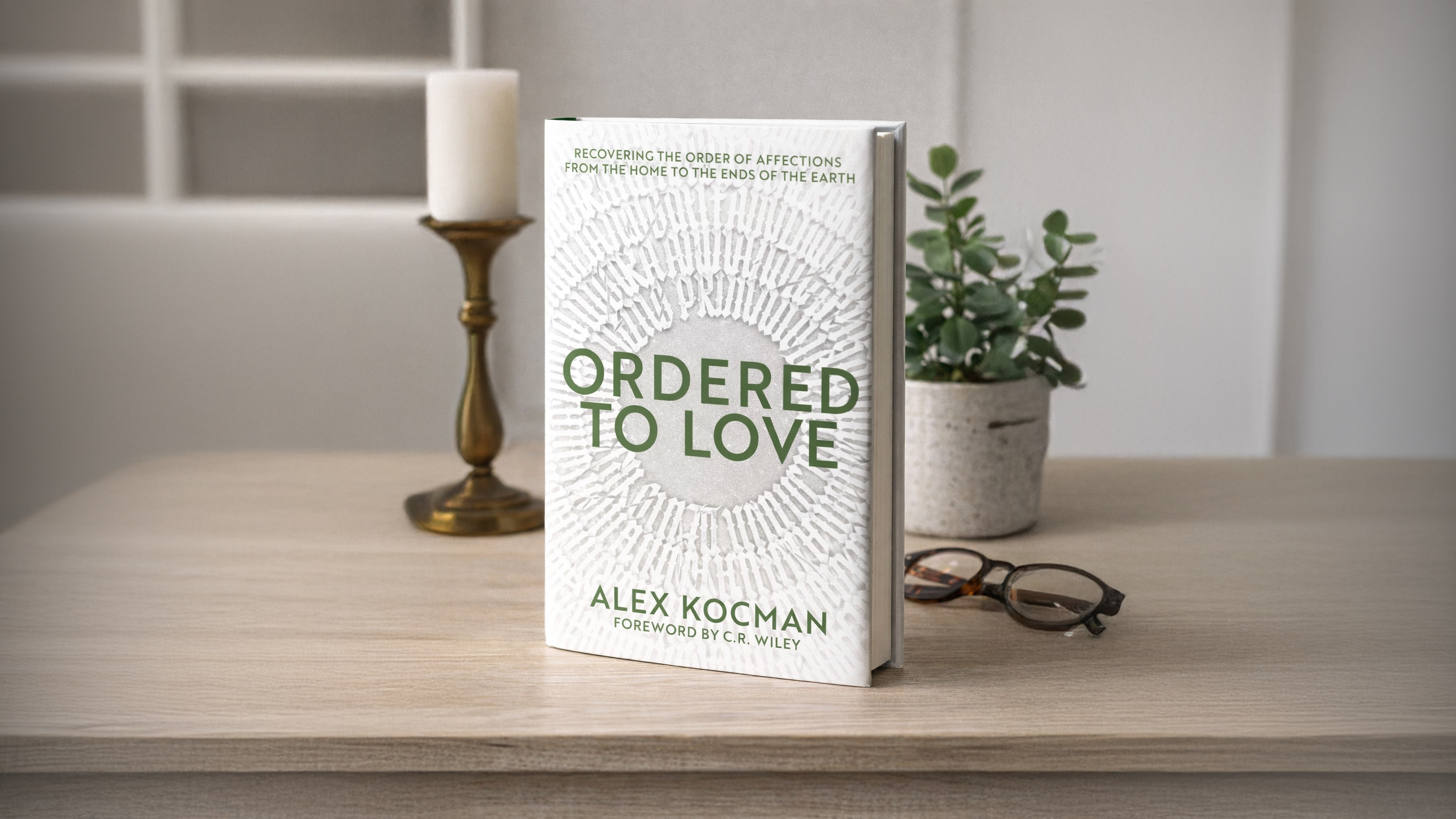
I wrote Ordered to Love because many Christians sense this disorder but lack language for it. They feel guilty for giving proper attention to family life. They hesitate to commit deeply to a local church. They are unsure how to speak about loving one’s own nation or people without being misunderstood. At the same time, they feel pressure to care about everything with the same intensity. They know they’re called to make disciples of all nations in some way (Matthew 28:18–20), but they aren’t sure how to fit that in with every other duty they’re balancing. That feeling of being spread too thin—like butter over too much toast—does not come from Scripture. It comes from a moral vision that has lost its sense of order.
The book argues that recovering order brings steadiness rather than constraint. Clear obligations allow people to act faithfully without pretending to be everywhere at once. Local faithfulness strengthens wider concern instead of competing with it. Mission grows out of rooted lives and sustained commitments.
This conversation matters now because many of the structures that once carried moral formation are under strain. Families feel fragile. Churches struggle to hold people together. Communities fracture. Political debates sharpen while producing less understanding. In that environment, people are drawn toward simple answers that promise relief. Some choose limitless openness. Others retreat into hard lines. Both approaches bypass the patient work of ordering love.
Ordered to Love is written for Christians who want to live with clarity and steadiness in this moment. It draws from Scripture and the Christian tradition, with attention to practice rather than posture. The aim is not to offer a program or a platform, but to recover confidence in God’s design for ordinary faithfulness.
The book is scheduled to publish this month thanks to my friends at Founders Press. Alongside it, I am hoping to grow collection of articles and resources that apply these themes to everyday life—stay tuned.
If you would like updates on the book, release details, and related material, you can sign up at
orderedtolove.com.
Let’s learn again how to love well, beginning where God has placed us.
Discover more from Alex Kocman
Subscribe to get the latest posts sent to your email.