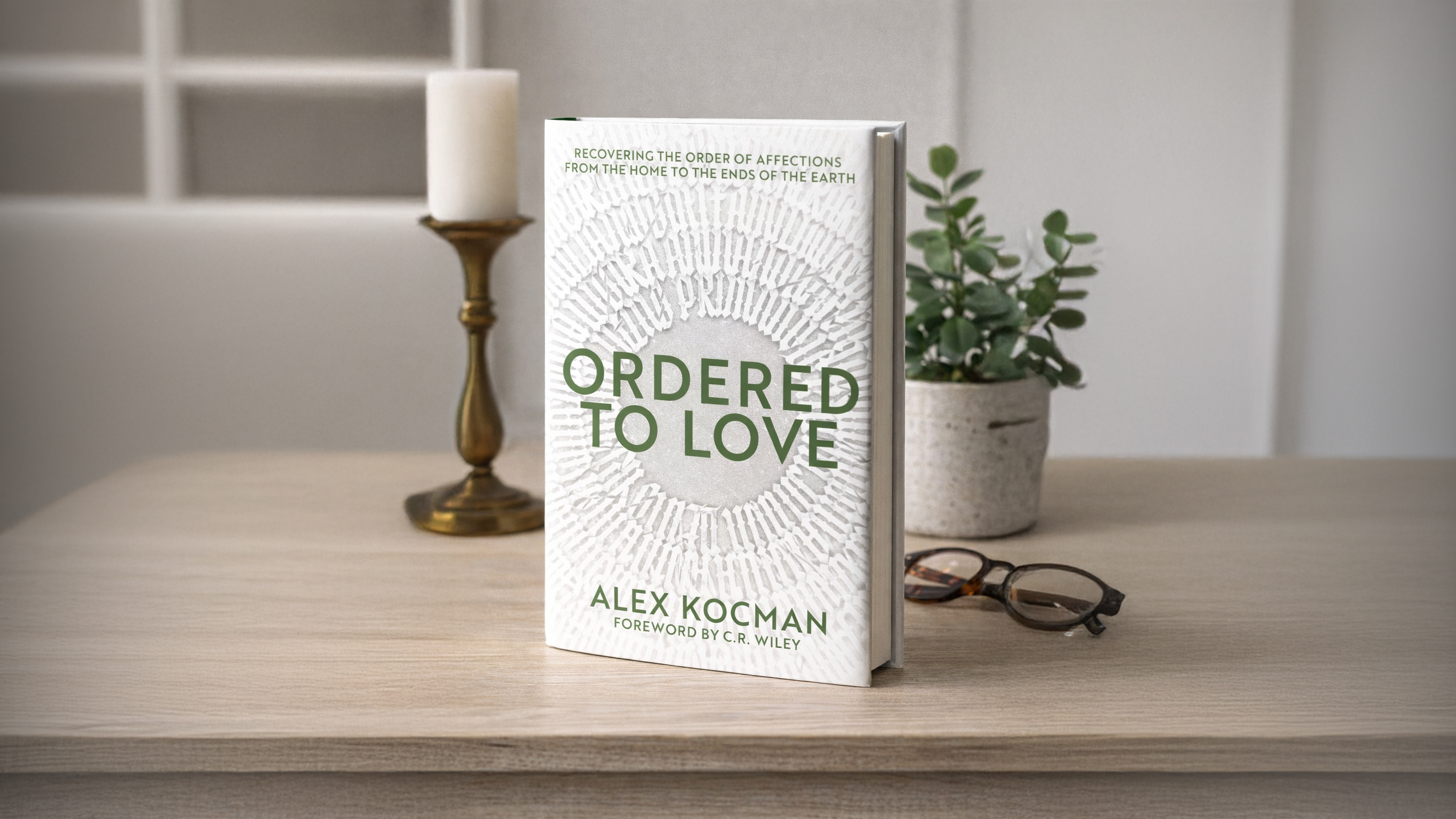
This essay appears in full in Volume 2 of Triptych (Fall 2026). The introduction is below.

It has been not quite two years since Vice President J. D. Vance told Fox News’s Sean Hannity that “You love your family, and then you love your neighbor, and then you love your community, and then you love your fellow citizens in your own country. And then after that, you can focus and prioritize the rest of the world.” This he followed later on social media with an answer to his critics: “Just Google ‘ordo amoris.’”
Much has transpired in the news cycles since. But the public conversation surrounding the ordo amoris has not advanced far beyond the fundamental question: Is the order of love a theological novum—an obscure notion recovered from antiquity to provide philosophical justification for xenophobic or parochial attitudes in an increasingly nationalistic moment? Or is it a framework that gives us a roadmap for the present collision with globalism—a way to meet the moment with restraint, without losing our souls? These questions are particularly important to evangelicalism, caught as it were between its conservative, activistic tendencies on one side and its universalistic, missionary impulse on the other. The news cycle cannot settle these questions, because they are older than our contemporary concerns. To answer them, we must consult the tradition itself.
Its verdict, as we shall see, is plain: the order of love is no novelty but the settled teaching of the church, and its recovery is overdue. Rightly ordered love propels the church’s mission to the nations even as it binds the believer to family, place, and neighbor. The difficulty is determining what we owe particular neighbors when their claims compete.
Continue reading “What Do We Owe Our Neighbor?” at Triptych →
Discover more from Alex Kocman
Subscribe to get the latest posts sent to your email.